First things first: the Meta Andromeda update changed an advertising model that was built around preset target groups.
Advertisers refined interests, stacked audiences, tested lookalikes, and created increasingly detailed campaign structures. The logic was simple: define the audience first, then serve it the right ad. That logic has changed. 2026 marks the point where the shift is no longer coming. It’s here.
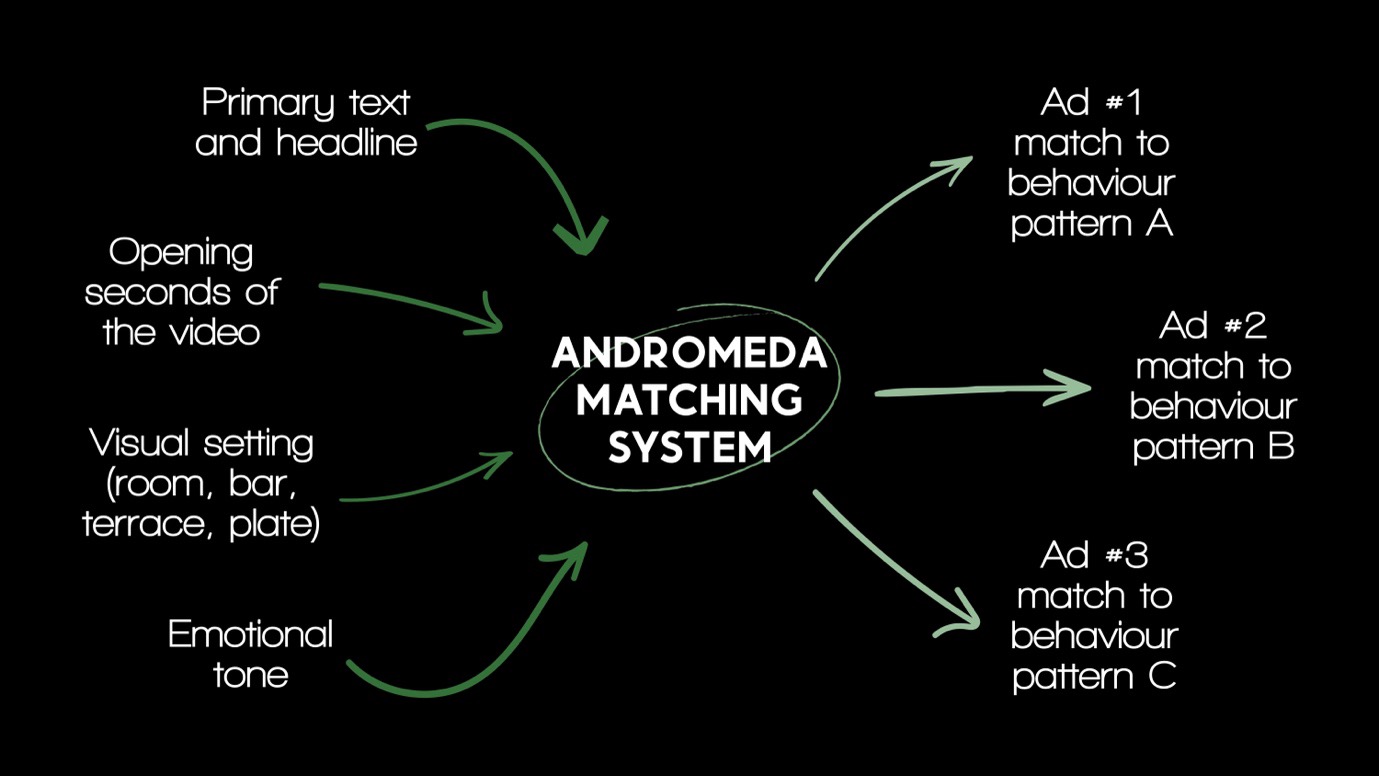
Meta Andromeda is the industry term used to describe a deeper shift in how Meta’s advertising system works. It reflects the growing role of AI in how ads are selected and delivered. Instead of relying on audience labels set by advertisers, the system now predicts who is most likely to respond based on the creative itself, meaning the photos, videos, and graphics you show, how people engage with it, and what their behaviour signals in real time.
For hotels, restaurants, and destination brands, this Meta ads update changes how content is planned, produced, and refreshed.
Think of Andromeda as the engine and Advantage+ as the tools that run on it. With Advantage+ Audience, The system is less focused on showing an ad to someone because they match a predefined interest or demographic. It is more focused on predicting who is likely to respond to a particular message or visual, based on how similar users have behaved before.
The question is no longer only “Who is our target audience?” It is also “What will make the right people stop scrolling, engage, and act?”
This does not make targeting irrelevant. Location, exclusions, first-party data, and commercial objectives still matter. But they are no longer the only strategic levers. The creative itself now carries more of the weight. The exact words in the primary text, the headline, the image copy, the opening seconds of a video, the setting, the pacing, and the emotional tone all help communicate what the ad is about and who is most likely to respond to it.
Industry analysis of Andromeda suggests Meta weighs three things before showing an ad:
This means a bigger budget does not guarantee delivery. A smaller hotel or restaurant with a more relevant ad can outperform a competitor that spends more.
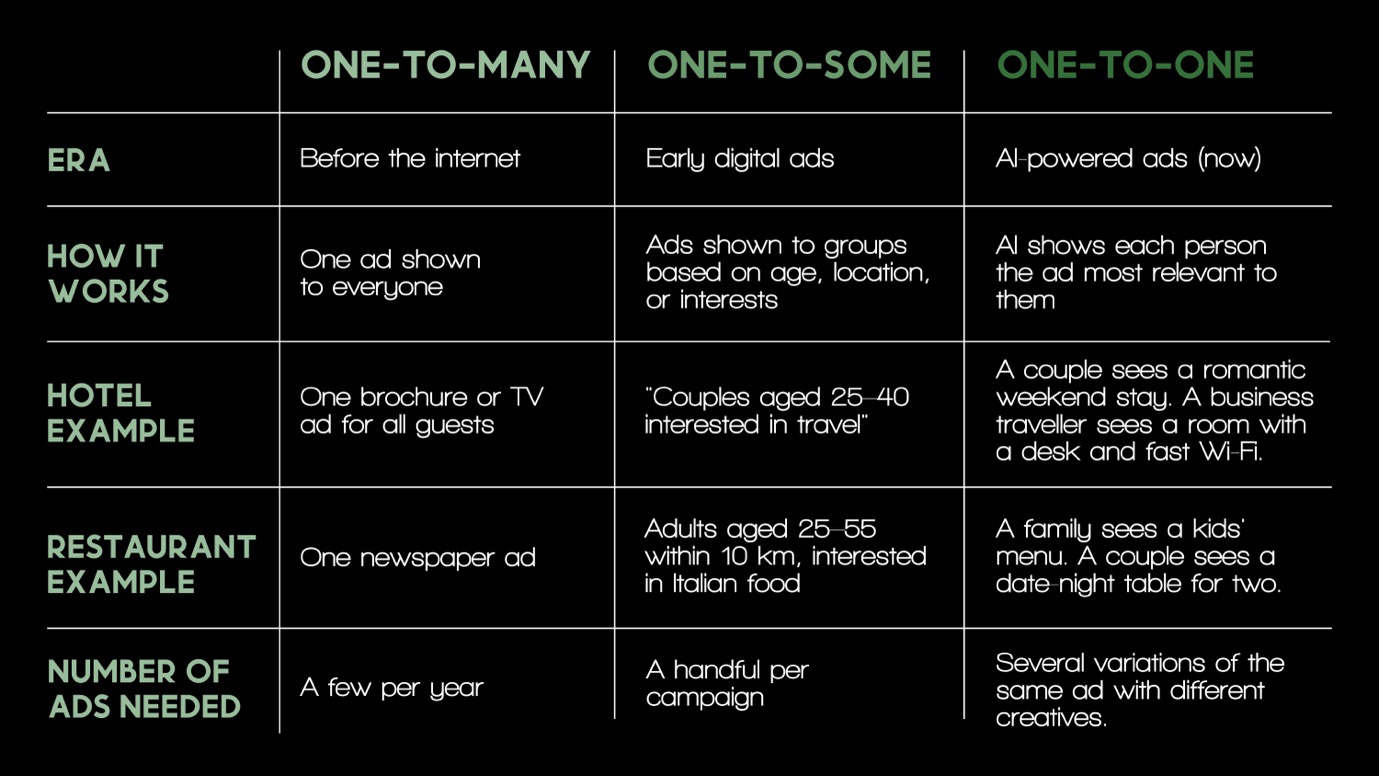
For hospitality businesses, this distinction is especially important. A hotel does not have one type of audience. It has a collection of motivations. One traveller may want a quiet, design-led escape. Another may be booking a business trip. Someone else may be searching for a family-friendly base or a better way to experience the city. The property is the same. The reason for booking is not.
The same applies to restaurants. One guest is looking for a date-night atmosphere. Another wants a reliable business lunch. Someone else is searching for a weekend brunch spot, a chef’s tasting menu, or a casual neighbourhood dinner. The kitchen is the same. The reason for choosing it is not.
This is where hyper-personalisation comes in. It uses AI, machine learning, and real-time behaviour data to tailor messages to different people. In practice, the same hotel or restaurant can show different content depending on what each person is most likely toThis also makes appealing ads more important than ever. If people scroll past your photos or videos, Meta shows them to fewer people. If people stop, watch, and engage, your ads reach more of the right guests.
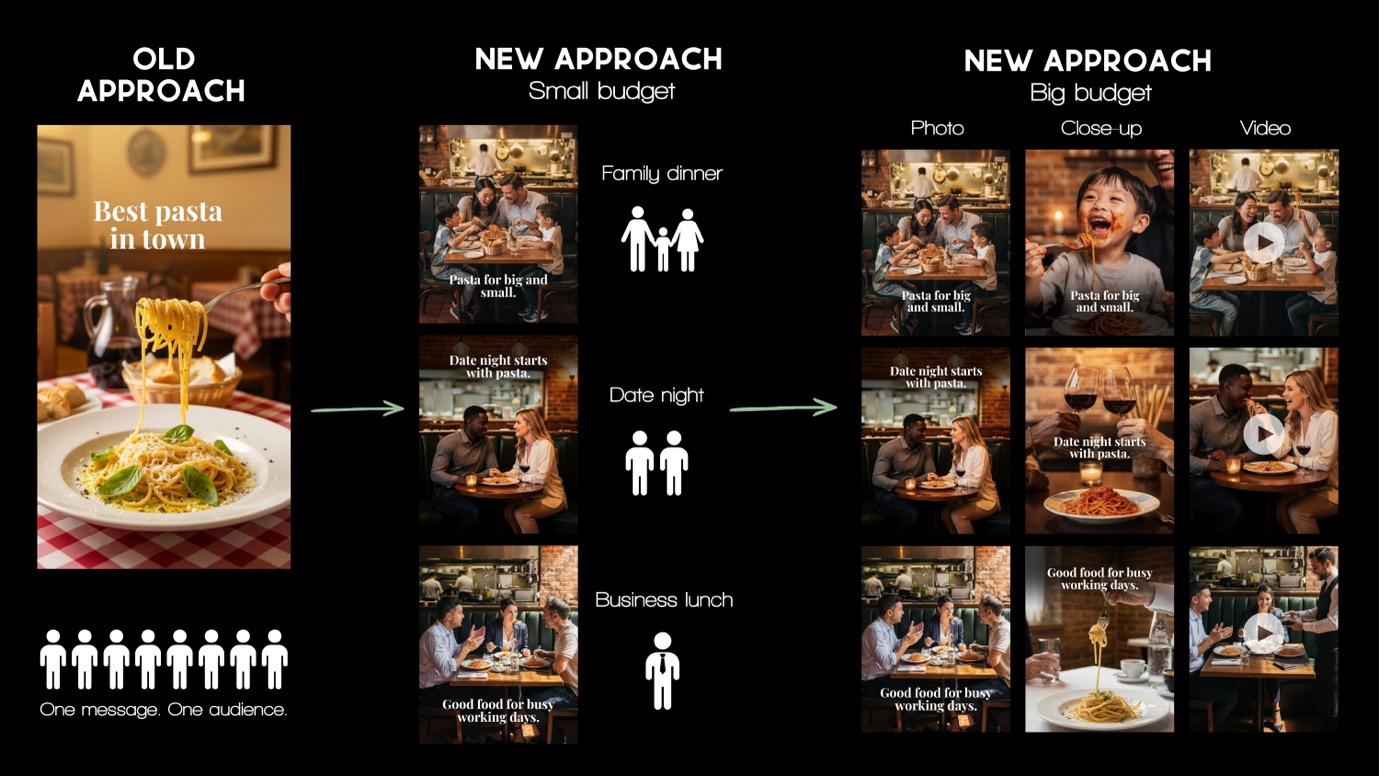
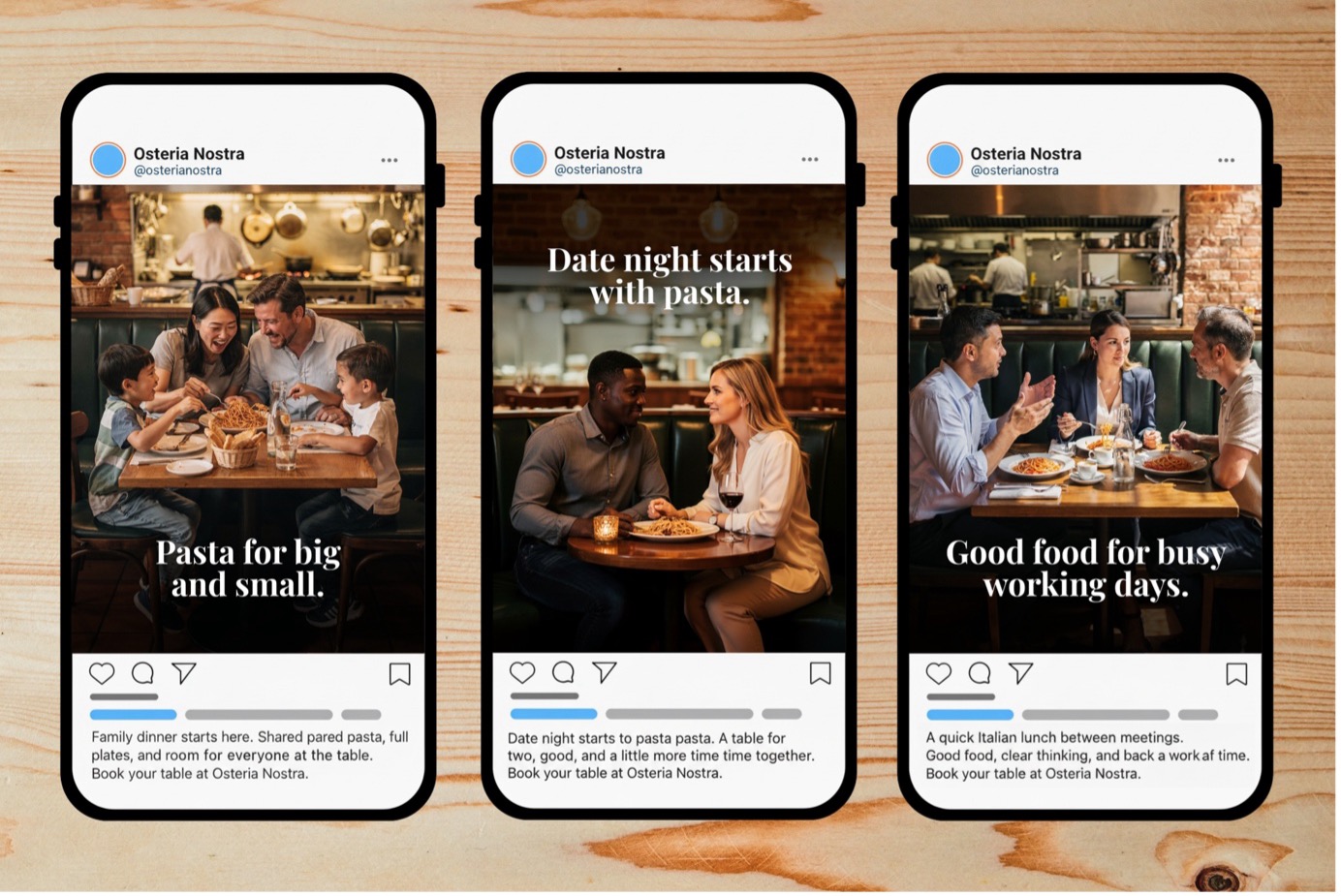
For example, imagine the same Italian restaurant serving the same spaghetti dish to three different audiences. The restaurant stays consistent in the look in every ad, with the same exposed brick walls, banquette seating, warm lighting, and open kitchen.
The restaurant has not changed. Firstly, the reason has changed, but also the people, camera angle, and headline have changed. Each ad gives Meta another option to deliver. As it gathers response and conversion data, it can prioritise the ads it predicts will work best for different people.
This is why the diversity of your photos and videos matters.
A campaign should not rely on one hero image, one offer, and one generic message. It needs a dynamic approach to creative, with multiple options that give the system different interpretations of the same brand.
With a small budget, that can mean one ad set with one ad per occasion: a family dinner, a date night, and a business lunch. With a bigger budget, each occasion can get several formats, such as a photo, a close-up, and a short video as shown below.
And if you’re a hotel? The same logic applies. Instead of one ad showing a room, create different ads for different reasons to stay. And keep in mind, that different formats speak to different people. A guest testimonial can reassure first-time visitors, while a neighbourhood guide speaks to city explorers. A staff-led video shows the human side of the stay, and a design-led edit appeals to guests who care about style and atmosphere. For people who are ready to book, a direct booking message closes the loop.
These are not cosmetic variations. Changing the colour or rewriting one headline does not create meaningful creative diversity. Stronger variations use different hooks, formats, emotional angles, and entry points. Creative strategy gives Meta more useful signals to work with, and in return, the system can match the right message to the right person more effectively.
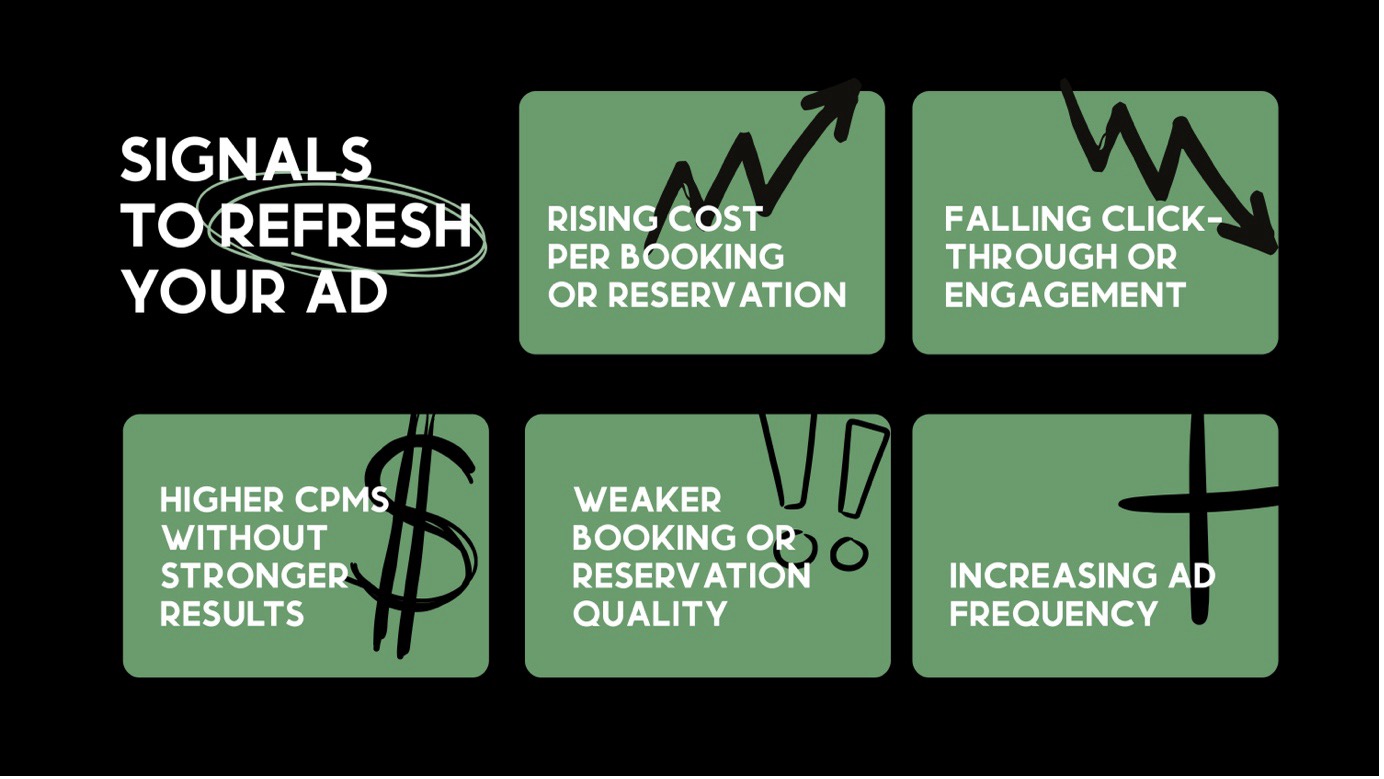
The transition can feel uncomfortable in the dashboard. A previously reliable ad may lose momentum. Costs may rise. Click-through rates may decline. Delivery may become less predictable.
may also arrive faster. This means people see the same ad too often and gradually stop noticing, engaging with, or responding to it. Our working benchmark at Studio 49 is that high-spend hospitality campaigns may need meaningful creative refreshes every two to four weeks, rather than relying on the same assets for six to eight weeks. This is not a universal Meta rule. It is a practical planning benchmark based on how quickly performance can decay in busy campaigns.
Hotels and restaurants both face additional pressure because demand is constantly moving. Seasonality, occupancy, covers, events, menu changes, weather, pricing, review cycles, and competitor activity all affect performance. A hotel creative that works during a quiet January weekend may not work during a major city event. The answer is not to react to every small change. Instead, teams should compare costs, engagement, frequency, and booking or reservation results before deciding whether the creative needs to change.
One weak metric does not automatically signal failure, but several declining signals usually deserve attention.
Meta’s advertising environment is becoming more automated. That does not make strategy less important. It makes strategy more visible in the positioning, message, image, video, and reason someone should care.
The strongest hospitality brands will not simply produce more content. They will create more distinct expressions of who they are, moving beyond generic amenity-led advertising towards a clear identity that guests can recognise and connect with. A hotel is not only a room. A restaurant is not only a menu. A destination is not only a list of attractions. Each needs a point of view.
For hospitality ads, a clear identity matters more than a list of amenities.
The brands that perform best will combine clean data with a richer creative system. They will give Meta enough variety to learn, while giving guests a reason to care.
Avoid filling campaigns with similar ads or creating a separate ad set for every audience. If one occasion, such as family dinner or a weekend stay, consistently brings more bookings, prioritise the ads that speak to it.
Success comes from understanding your target groups, creating appealing content for them, and using reliable data to see what leads to bookings or enquiries.


